

The average pet-sitting rate in the US is $20 to $35 for a 30-minute visit. It costs between $50 and $100 per day and $75 to $120 for overnight care. According to the Pet Sitters International (PSI), overnight rates fall around $97 per night in 2026.
But what about dog sitter rates?
Professional dog sitters often charge more because dogs require regular walks, exercise, and companionship. Dog sitting also includes scheduled exercise, toilet breaks, feeding routines, and longer companionship visits.
So, dog sitting rates are usually on the higher end due to extra care involved. Average dog sitting rates are between $28 and $32 per visit and $140 for full-day care.
If you are still learning how to build your business, read our full guide to starting a pet sitting business before you set your prices.How We Calculated Average Pet Sitting Rates
We (Calday) analysed pricing from 237 independent pet sitting businesses across 42 states between June and July 2026. We recorded publicly listed pet sitting prices for drop-in visits, overnight stays, dog sitting, holiday surcharges, and additional pet fees. We then compared these findings with industry surveys published by Pet Sitters International (PSI) and the National Association of Professional Pet Sitters (NAPPS).
The result?
The pricing ranges below reflect what most pet owners can expect to pay and what professional pet sitters commonly charge in 2026.
Average Pet Sitting Rates in 2026
Here is a breakdown of average pet sitting rates in 2026 in United States.
| Service | Pricing Range | Average Pet Sitting Rate |
|---|---|---|
| 30-minute drop-in visit | $20 to $35 | $25 |
| 60-minute visit | $30 to $45 | $38 |
| Dog walking (30 min) | $20 to $35 | $28 |
| Overnight (in client's home) | $60 to $120 | $97 |
| Per week | $250 to $375 | $310 |
| Holiday surcharge | Add 25 to 50% | +$10 to $20 |
| Additional pet fee | Add $5 to $10 | per pet |
| Per day (multiple visits) | $50 to $100 | $75 |
Note: Most professional pet sitters cluster within these price ranges. However, the rates can vary for you based on the cost of living and demand in your local market.
Why do different websites quote different pet sitting rates?
Some sources report advertised price ranges, while others publish survey averages based on what professional pet sitters actually earn. Throughout this guide, we've used market pricing collected from 237 independent pet sitting businesses and cross-checked our findings against industry surveys from PSI and NAPPS.
Also, weekly pricing is not simply the daily rate multiplied by seven. Most professional pet sitters offer discounted rates for recurring or long-term bookings, which is why weekly packages are typically cheaper.
Related
Check our detailed report how much pet sitters make in different states
What Changes the Rate
Pet sitting rates are not fixed.
What you charge as a pet sitter and what you pay as a pet parent depends on multiple factors that affect the sitter's time, workload, and operating costs:
Location
Where you live is probably one of the most important influences on pricing. This is due to higher living costs and stronger demand.
Pet sitters based in large cities, such as New York, San Francisco, Seattle, Boston, and Los Angeles, often charge 30% to 50% more than the national average. Meanwhile, smaller towns and rural communities usually have lower rates.
Number of Pets
As the number of pets to be taken care of increases, pet sitters' rates also go up. Most professional sitters charge an additional $5 to $10 per pet for each extra animal because they require more care and attention.
Holidays and Peak Weeks
The demand for pet sitting increases during long weekends, school breaks, and holidays. Thanksgiving, Christmas, New Year's, Memorial Day, and the Fourth of July are some of the busiest periods for pet sitting professionals.Pet sitters add a 25% to 50% holiday surcharge because they get more offers and give up more of their time.
Medication and Special Needs Care
Pets that need medication, mobility support, or close care require additional responsibility. So, pet sitters charge a higher rate for pets with special needs to reflect the extra time, skill, and attention special pets require.
For example, pet sitting a diabetic cat usually costs more than caring for a healthy adult cat. The cat requires administering insulin injections twice a day.
Last Minute Bookings
Last minute requests can disrupt a sitter's existing schedule, so they charge a convenience fee for bookings made at the last minute, especially during peak seasons.
Travel Distance
Sitters charge an additional fee for homes falling outside their normal service area because they have to cover more fuel costs. Many pet sitters include a five- to ten-mile service radius before adding mileage fees.
From a pet sitter’s point of view, this decreases the number of appointments they can take in a day.
How Daily, Weekly and Long-Stay Pricing Work
We have covered how daily and weekly rates work to help you compare and choose the most cost-effective offer.
Pet Sitting Rates Per Day
Pet sitting rates per day usually cover several visits or extended care instead of charging you for each visit separately. This gives you a better value than booking multiple visits.
You can also negotiate weekly pet sitting packages if you like their service. It can decrease your total cost by 10% to 15% as compared to when you pay the nightly rate for seven days.
The same goes for long-stay and monthly pet sitter prices. If you want a sitter for several weeks or multiple pets, ask for a custom pet sitter rate quote. This may save you money.
Related
After reviewing pricing from more than 200 professional pet sitting businesses, we noticed three consistent trends:
- Overnight pet sitting is the fastest-growing premium service, close to $100 per night.
- Additional pet fees are consistent nationwide, from $5 to $10 per pet.
- Holiday surcharges are now standard practice, especially during Thanksgiving and Christmas.
Dog Sitting Rates: Per Visit, Per Day & Overnight
Dog sitting rates run a little differently from general pet sitting because dogs demand more active care. They need more hands-on care, regular walks, companionship, and exercise. So, naturally, you have to pay more.
The exact rate for dog sitting depends on the type of service, the dog's specific needs, your location, and whether you hire someone offering dog sitting informally or a professional sitter.
Here is a breakdown of dog sitting rates:
| Service | Market Pricing Range | Average Dog Sitting Rates |
|---|---|---|
| Per visit (30 min) | $25 to $45 | $32 |
| Half-day (4 hours) | $60 to $100 | $80 |
| Full day (8 to 10 hours) | $100 to $175 | $140 |
| Overnight (10 to 12 hours) | $75 to $150 | $97 |
| Per week | $300 to $450 | $375 |
Note: Overnight dog sitting has a slightly wider pricing range than general pet sitting. That’s because many bookings include evening walks, exercise, and longer periods of companionship.
Also, the type of dog sitter you hire matters more than the kind of service you choose.
Why?
Because professional dog sitters and informal pet sitters charge differently.
Professional dog sitters have liability insurance, a written contract, and a real business setup, which is why they charge $25 to $60 per visit. They also invest in certifications, maintain professional standards, pay for bonds, and always have a recourse for when things go south. As a pet owner, you are not just paying for the pet sitting time but also for their infrastructure and your peace of mind.
On the other hand, if you hire someone who sits pets for a hobby, is a friend of a friend or someone doing it informally, you will have to pay $15 to $30 per visit.
However, lower rates also mean less accountability. There is no written contract, no insurance, and no professional training. For some people, this arrangement works, but for some it does not.
And that is fair!
Then comes dog walking. It is priced separately from dog sitting because it is not the same as a drop-in visit where the dog just gets a bathroom break. Dog sitters charge $20 to $35 per walk for 20 to 30 minutes of dog walking with actual exercise and attention depending on where you live.
Comparison between Pet Sitting Rates and Dog Sitting Rates
| Service | Pet Sitting | Dog Sitting |
|---|---|---|
| 30-minute visit | $25 | $32 |
| Daily care | $75 | $140 |
| Overnight | $97 | $97 |
| Exercise included | Sometimes | Yes |
| Walks included | Sometimes | Always |
Overnight Pet Sitting Rates
Overnight pet sitting rates are higher than normal pet sitting because the sitter commits to your pet for an entire night. They stay in your home, look after your pet, provide company, handle medications, and respond to any issues that arise during the night.
Most professional overnight pet sitting services cost between $75 and $120 per night. Our market analysis shows an average market rate of about $97. Rates are typically higher for puppies, senior pets, multiple pets, and animals requiring medication or overnight supervision.
According to Pet Sitters International's 2025 Pet Sitter Salary Survey, the average overnight pet sitting fee reported by professional pet sitters was about $97 per night.
So, if you are researching dog sitting rates, don't just go for the price. Look at the sitter's experience, reviews, insurance, and the services they offer.
How Much to Charge for Pet Sitting: Setting Your Own Rates
If you are a pet sitter and you want help with setting your rates, here is how you can come up with numbers that actually pay you.
Setting your final pet sitter prices is not about competing with the least expensive pet sitter in town. You need to cover your costs, build a business that delivers good profits over time, and earn a fair income to take home.
Use our five steps to set your pet sitting rates with confidence:
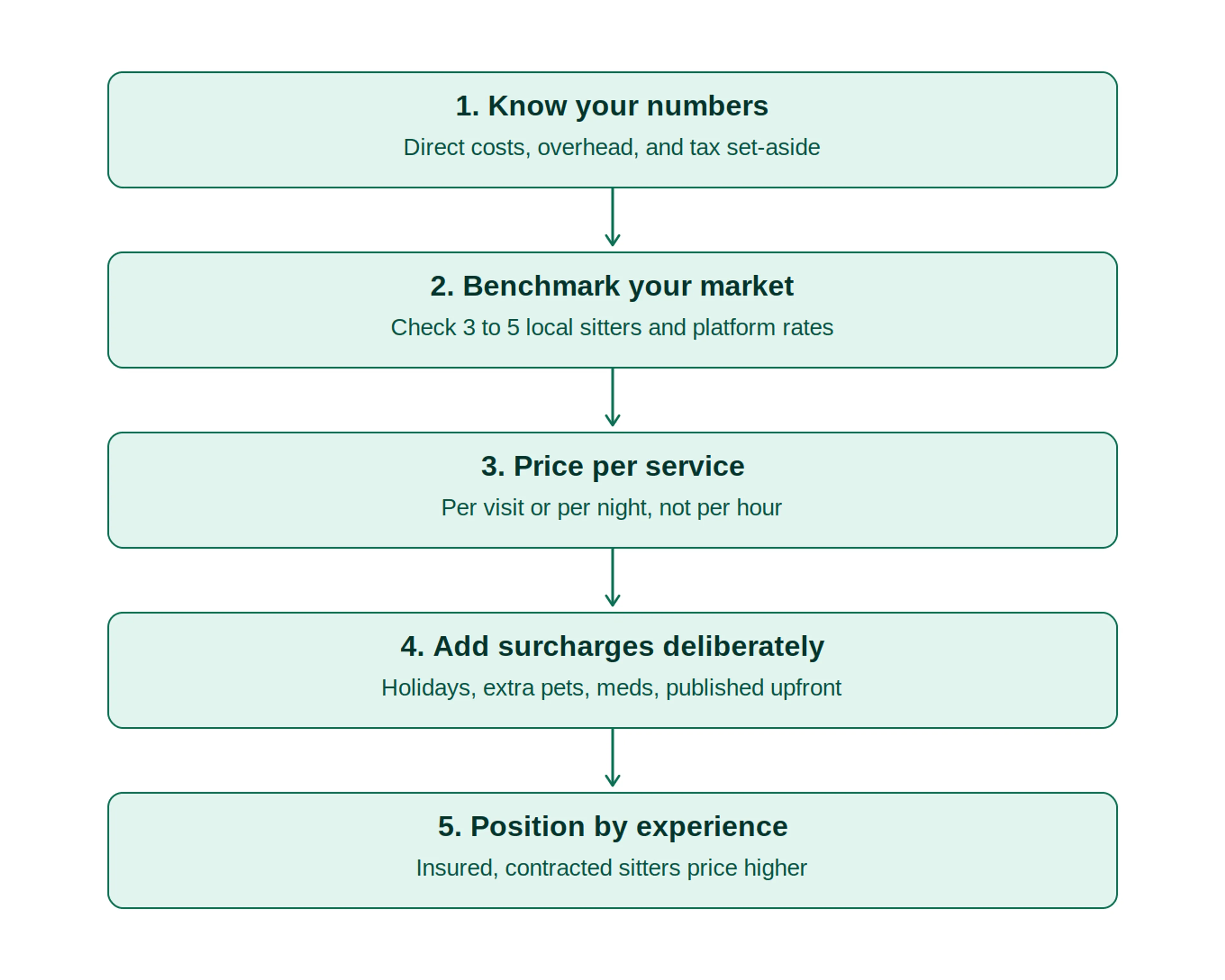
1. Know Your Numbers
The biggest mistake that pet sitters make is underestimating their operating costs. The direct costs include cleaning supplies, pet treats, fuel, and waste bags. But do not forget to add your overhead expenses to your direct costs.
Pet sitting costs also include equipment, insurance, scheduling and booking software, and advertising. Professional pet sitters also set aside 15% to 30% of their income for self-employment taxes because it affects profitability. That's why many businesses calculate a baseline rate before publishing prices.
2. Benchmark Your Market
Know your competitors. Study three to five of them to get a faint idea of what they are charging. Compare your rates with the rates on platforms like Rover and Wag.
Platforms like Rover also deduct 20% to 40% in fees. If you are on such a platform, include their fee to your pet sitting charges.
3. Price Per Service, Not Per Hour
It is easier for potential clients to understand prices per visit or per night as compared to pet sitter hourly rates. Plus, service-based pricing is better in terms of rewards because you earn the same amount even if you complete your visit earlier.
4. Add Surcharges Deliberately
Holidays, extended travel, special needs, medication, and extra pets all increase your workload. Make sure that you charge a fee for them in advance so your clients are not blindsided later on.
5. Position Yourself Based on Experience
If you use written service agreements, have sparkling reviews, and also pay for insurance, you should charge what other professional sitters are charging. No need to compete with hobby sitters. A clear pet sitting contract template can also help you set expectations before every booking. People pay more for peace of mind and reliability.
You don't have to do all of this manually, though!
Related
Try our Pet Sitter Rates Calculator
Plug in your costs and target income to get your baseline rates before comparing them with your local market.
How to Raise Your Pet Sitter Rates Without Losing Clients?
Increasing your rates can feel a little weird, but it is a part of a pet sitting business. You should review your prices once a year. This makes your rates predictable for clients and also allows you to adjust for rising costs.
Tell your clients about an increase in rates 30 days in advance. This not only helps them plan ahead but also shows them that you value the relationship you have with them. If you think you will lose long-term clients, try offering them your old rate for one final booking before your new rates take effect.
Try to connect your price increase to added value.
You can offer more photos, detailed report cards, or expanded availability. Clients are more likely to adjust to increased rates when they think they are getting more.
Don't worry about loyal clients, as they tend to stay if the increases are well explained, reasonable, and predictable.
Publish Your Price List and Make Booking Easy
People are more likely to hire when they can see your rates upfront. A clear rate list builds trust, answers FAQs, and reduces misunderstandings.
Once you have made your prices public, make the booking process equally simple for your clients.
An online booking page for pet sitters helps clients choose a service, pick the time, and confirm their appointment in just a few clicks. You can easily send a professional invoice after the service is completed.
Clear pricing and a straightforward booking process create a better experience for both you and your clients. It saves both you and your clients time, reduces constant back-and-forth communication, and makes your business look professional.
Once your rates are public, you should focus on getting more pet sitting clients with consistent marketing and client referrals.
Your Next Step as a Pet Sitter
Understanding the average pet sitting rates is only the first step. If you want to build a profitable business, you need to know your costs, set rates as per your experience, and make them public so your clients are in the loop.
Clear pricing and a simple booking process can help you attract and land more clients.
Calday offers pet sitters online booking, automated reminders, client and pet notes, and invoicing.
Free to start. No credit card.